
Many pests display seasonal rhythms driven by temperature, moisture, food availability, and breeding cycles. Over the year, populations of insects, rodents, and other nuisance species often increase or decrease in response to changing weather and habitat conditions. Understanding these rhythms involves observing when pests are most active outdoors, when they move toward sheltered sites such as buildings, and how lifecycle stages (egg, larva/nymph, adult) align with seasonal conditions that support reproduction or survival.
Seasonal awareness may inform the timing of inspections, targeted control measures, and maintenance activities without implying a single universal approach. Different structures, landscapes, and climatic zones can shift typical timing by weeks or months; for example, a temperate region may see one pattern while a subtropical region shows another. Practitioners and homeowners can use seasonal patterns to prioritize which pests to monitor and which structural or environmental factors to address at particular times of year.
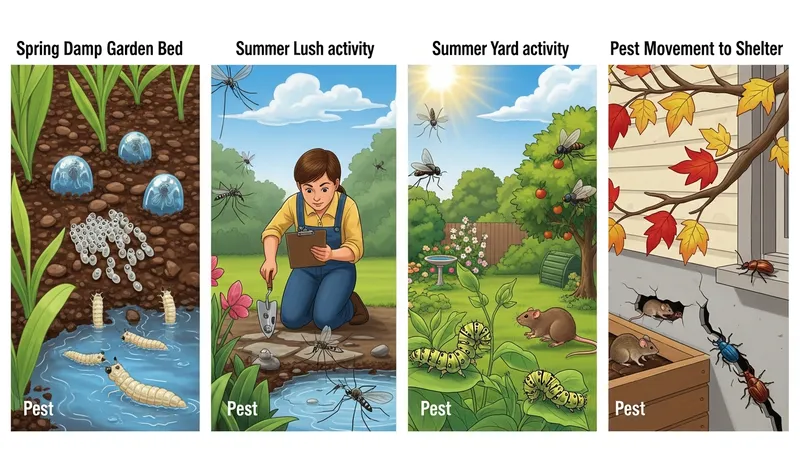
Temperature and moisture act as primary drivers of seasonal pest activity and may influence reproduction and movement. For many insects, warmer spring and summer conditions can accelerate development and increase foraging, while cooler temperatures slow metabolism and reduce surface activity. Conversely, some pests seek entry into structures during cooler months to access heat and sheltered food sources. These general patterns may often help explain why certain signs appear more frequently at particular times of year, though local microclimates can create exceptions.
Lifecycle timing often determines the most effective window for interventions that aim to reduce future populations rather than solely addressing current sightings. For example, measures that focus on interrupting breeding or reducing available nesting habitat may be most relevant when immature stages are present or when adults are actively seeking nesting sites. Such timing considerations typically vary by species; therefore, identification of the pest and knowledge of its biology can help align actions with seasonal windows.
Human activity and property maintenance routines also shape seasonal pest dynamics. Gardening, irrigation, composting, and outdoor storage can create temporary resources for pests, especially during warmer months when decomposition and plant growth increase food availability. Conversely, building maintenance such as repairing leaks, reducing clutter, and adjusting landscaping buffers may change habitat suitability. These factors often interact with seasonal weather patterns to produce localized increases or decreases in pest pressure.
Monitoring approaches commonly combine scheduled inspections with event-driven checks after weather changes or property alterations. Scheduled inspections may be more frequent during known peak periods for a given pest, while event-driven checks often follow heavy rains, unseasonal warmth, or changes in property use. Documentation of findings over several seasons can reveal recurring trends and help refine the timing and focus of inspections, typically improving the relevance of subsequent preventive steps.
Understanding seasonal patterns provides a contextual framework rather than a one-size-fits-all solution. Observing environmental cues, identifying species and lifecycle stages, and recording historical patterns on a property can often lead to more informed decisions about timing and emphasis. The next sections examine practical components and considerations in more detail.
Ambient temperature and relative humidity commonly influence metabolic rates, development speed, and survival for many pest species. Insects often develop more rapidly during sustained warm periods and may produce additional generations in climates with extended warmth. Conversely, extended cool or dry spells can reduce activity or force pests to seek out microhabitats that buffer extremes. Rain events may increase mosquito breeding in standing water, while drought may concentrate rodents around irrigation systems and stored water. These drivers typically interact with local landscaping and building features to shape where and when pests appear.
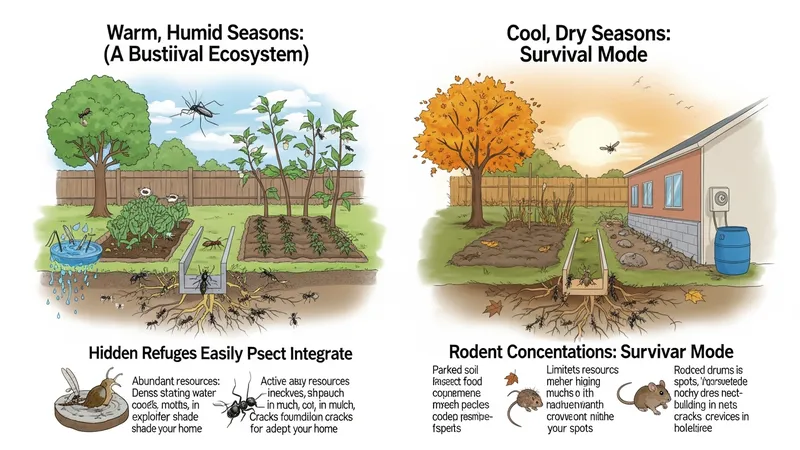
Vegetation and landscape design can change seasonal attractiveness for pests. Dense groundcover, mulched beds, and unmanaged shrubbery may provide shelter and humidity that favor certain insects and small mammals, particularly during dry seasons. Similarly, fruiting trees and vegetable gardens may create seasonal food pulses that temporarily increase local pest populations. Adjusting plant selection, spacing, and maintenance timing can be considered as part of a seasonal management framework; such adjustments may influence pest prevalence without implying any single required action.
Structural conditions and building systems often determine whether outdoor seasonal patterns translate into indoor problems. Gaps around doors, damaged screens, roofline openings, and foundation cracks may allow pests to enter when outdoor activity increases. HVAC systems and stored insulation can create warm pockets that are attractive during colder months. Seasonal maintenance such as clearing gutters or repairing weatherstripping may reduce entry opportunities, and tracking these interventions alongside observed pest activity can reveal correlations that inform future scheduling of maintenance.
Weather variability and climate trends may shift typical seasonal timing and intensity. Mild winters in some regions can allow survival of species that would otherwise be reduced by cold, while changes in precipitation patterns may alter breeding habitats. Monitoring long-term records of pest observations on a site can help detect shifts in seasonal peaks. Such tracking may be particularly relevant in areas where year-to-year weather variability is high, and it often complements short-term inspection data when planning seasonal activities.
Certain pests tend to be more noticeable during particular seasonal phases due to lifecycle events or behavioral shifts. For example, spring often coincides with increased activity for ants and termite swarms as reproductive individuals disperse, while summer heat can heighten mosquito and fly presence where standing water or organic waste accumulates. Late summer into autumn frequently sees rodents seeking shelter and food storage sites as outdoor resources decline, and some insect pests move indoors as temperatures drop. These patterns are general and may vary with local climate and habitat.
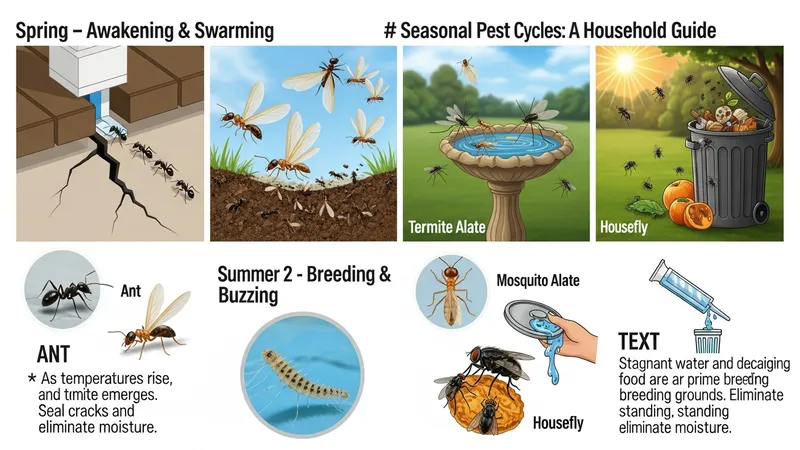
Lifecycle stage timing influences when control measures may have the greatest upstream impact on population growth. Treating or reducing habitat when immature stages are common may often reduce the magnitude of later adult peaks. For instance, interrupting breeding sites for mosquitoes before larvae develop can limit emergence, and managing nesting materials for rodents before young disperse may reduce population expansion. Identification of the species and a basic understanding of its lifecycle typically helps match seasonal activities to relevant lifecycle stages.
Season-specific inspection focus areas can change as weather and pest behavior shift. In wetter seasons, checking for standing water, clogged drains, and moisture accumulation may be more relevant, while drier seasons may require attention to irrigation patterns and dry food storage. During colder months, attention often shifts to potential indoor entry points and stored food vulnerabilities. These seasonal focal points commonly adapt to the examples introduced earlier, such as inspection schedules and habitat modification methods.
Seasonal records and photo documentation can strengthen recognition of recurring pest patterns on a property. Keeping simple logs of sightings, damage, and environmental conditions over multiple seasons may reveal trends that single observations miss. Over time, these records may help prioritize which pest types and which property areas warrant more frequent attention during specific seasonal windows. This approach typically encourages evidence-based timing rather than reactive responses alone.
Inspection frequency and scope often change across the year to reflect shifting pest risks. For example, inspections may be scheduled more frequently during historical peak months for certain pests and less frequent during low-activity periods, with additional checks after major weather events. Effective inspections commonly focus on likely entry points, moisture sources, food availability, and evidence of reproduction or activity. Using consistent checklists and noting seasonal variations across multiple years may improve the predictive value of inspections for a given property.
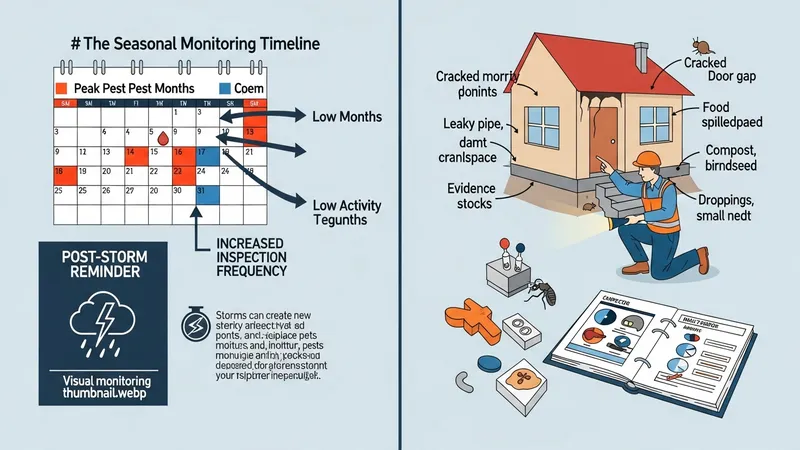
Passive and active monitoring techniques may complement seasonal inspection plans. Passive techniques such as placing non-toxic traps or visual monitoring stations can reveal presence over time and may be checked on a routine schedule that corresponds with seasonal peaks. Active monitoring, like targeted searches for nests, droppings, or damage, typically occurs when visual cues or seasonal expectations indicate increased activity. Both approaches can be timed to align with the monitoring and inspection schedules described earlier as examples.
Data from inspections often informs prioritization of exclusion and habitat modification efforts. For instance, evidence of entry through a particular wall cavity may point to sealing that area before a season when outdoor activity increases. Similarly, discovering standing water or clogged drains during wetter months may steer attention to drainage improvements. These considerations are presented as informational options that may be weighed according to the site’s specific seasonal patterns and constraints rather than prescriptive mandates.
Documentation and reassessment are useful seasonal practices. After implementing any measure, whether structural or environmental, follow-up inspections in subsequent seasonal windows can determine if observed patterns shifted. Longitudinal assessment may reveal whether timing adjustments are needed or whether different focal areas emerge. This cyclical learning process typically helps refine inspection frequency and monitoring placement over several seasons.
Preventive measures often center on reducing attractants and entry opportunities in ways that correspond to seasonal pressures. Maintenance tasks such as repairing screens and seals, pruning vegetation away from structures, and managing outdoor waste typically align with seasonal calendars—spring cleaning, pre-winter weatherproofing, and summer landscape management are common examples. Such timing often aims to remove conditions that could otherwise coincide with seasonal peaks in pest activity.
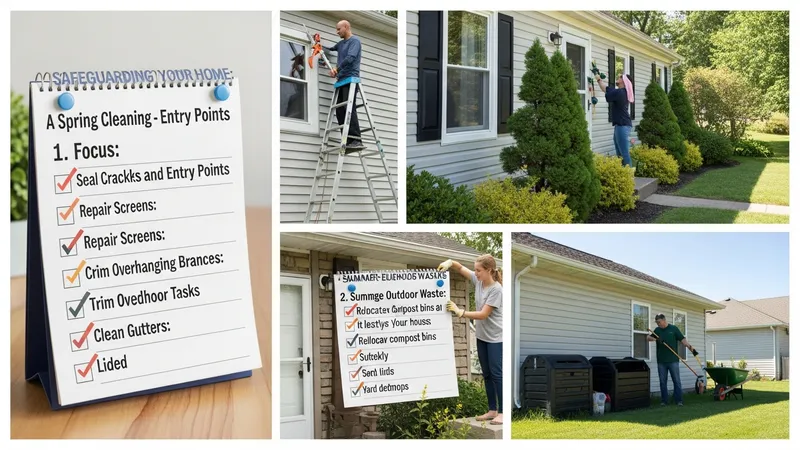
Long-term property maintenance may alter seasonal pest dynamics by changing habitat suitability over multiple years. Replacing decayed wood, improving drainage, and relocating compost or storage areas can gradually reduce recurring seasonal infestations. These interventions typically require planning and repeated attention across seasons to be effective, and their impacts may become clearer after several seasonal cycles rather than immediately.
Cost and logistical considerations often affect how seasonal practices are implemented. For instance, scheduling maintenance in off-peak months may offer convenience but could be less effective if it misses a pest’s critical lifecycle window. Balancing timing, available resources, and the likely seasonal peaks for target pests commonly informs which actions are pursued and when. Presenting these factors as considerations allows property managers and occupants to align maintenance planning with observed seasonal patterns.
Seasonal planning benefits from iterative review and adjustment. Recording outcomes, noting any shifts in timing or pest prevalence, and considering local climatic trends can help refine future schedules. Over time, a tailored seasonal approach that combines monitoring, habitat modification, targeted interventions, and maintenance scheduling may often reduce the frequency and severity of recurring pest issues without reliance on a single method or timing.